The perfect couple on paper
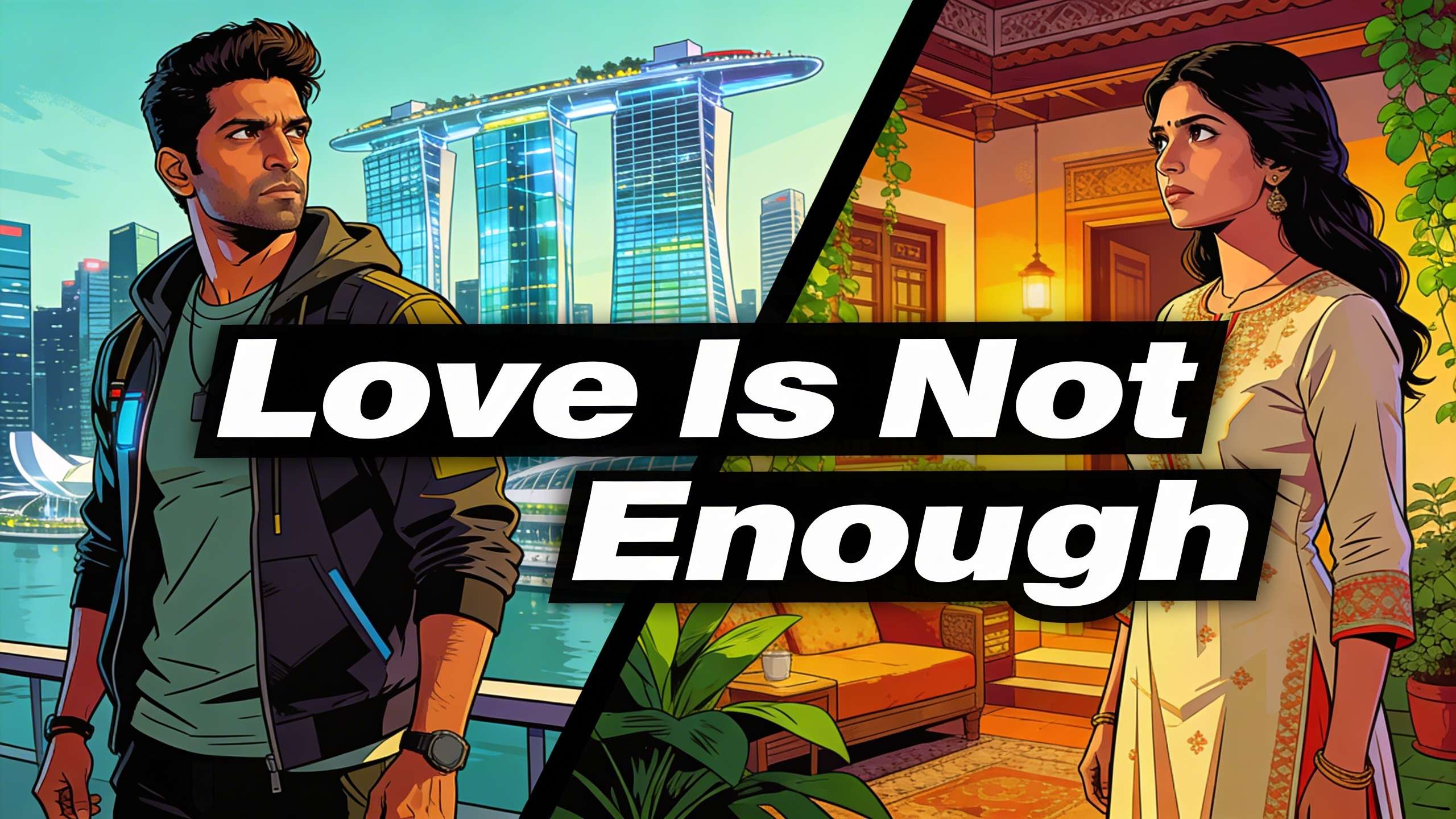
Priya and Arjun looked like the perfect match on Instagram. They came from similar backgrounds in South Delhi, their families got along famously over chai and samosas, and their chemistry was undeniable. Two years into their marriage, everyone assumed they had it all figured out.
But behind closed doors, a heavy silence was brewing. Arjun was quietly building toward his dream of a tech startup that would require relocating to Singapore for at least five years. Priya, on the other hand, had always assumed they would settle in Delhi, close to her aging parents, and buy a flat in Gurgaon by their late twenties.
Neither had explicitly discussed these timelines. They just assumed the other person was on the same page because, well, they were in love. The day Arjun finally brought up the Singapore opportunity, it wasn't just an argument—it was an explosion. It wasn't really about the move; it was about two people who loved each other deeply but were sprinting toward completely different futures.
Does this sound familiar? In the rush of romance, weddings, and settling down, the conversation about "where are we actually going?" often gets lost. We assume that because we love each other, we want the same life. But love and life goals are two very different things.

Why shared goals are the glue that holds you together
We often think compatibility is about liking the same movies, enjoying the same food, or having great physical chemistry. While those things are important, they aren't the structural beams that hold a relationship up when life gets heavy. Shared goals are.
Think of your relationship as a boat. You can be excellent rowers (good communication) and have a beautiful boat (financial stability), but if one person is rowing north and the other is rowing west, you're just going to go in circles until you're both exhausted. Eventually, one person has to give up their direction, or the boat breaks apart.
The impact of this misalignment is massive. According to the Pew Research Center, 40% of couples cited a lack of shared goals as a significant factor in their decision to separate or divorce. It is rarely a lack of love that breaks couples apart; it is usually a lack of a shared destination.
When you share a vision, obstacles become challenges to solve together rather than reasons to fight. A financial setback isn't "your fault" or "my fault"—it's a detour on "our journey." This shift in perspective from me-vs-you to us-vs-the-problem is powerful.
The 5 types of goals you need to discuss
When we talk about "goals," it can feel vague. To make it practical, you need to break it down into specific categories. Here is where most misalignment happens for young Indian couples:
1. Financial goals
Are you saving for a luxury wedding anniversary trip to Europe, or are you aggressively investing for early retirement? Do you believe in combining finances completely, or keeping things separate? If you need help starting this conversation, our guide on financial planning tips for Indian couples breaks down how to align your money mindsets without the awkwardness.
2. Career ambitions
Whose career takes priority if a transfer comes up? Are you both okay with the long hours a promotion might require? In many modern relationships, both partners are ambitious, which is fantastic, but it requires careful choreography to ensure neither person feels their dreams are being sidelined.
3. Family planning
Do you want kids? If so, when? And how will you raise them? This is often the biggest non-negotiable. Research published in the Journal of Family Issues notes that couples who discuss and align their family goals are 50% more likely to report being satisfied with their relationship. It's not just about having kids; it's about how you want to parent them.
4. Lifestyle choices
Do you want a bustling city life with social weekends, or a quiet suburban existence? Do you want your parents to live with you eventually? In the Indian context, the question of living arrangements with in-laws is a massive lifestyle goal that needs explicit discussion.
5. Personal growth
How do you want to evolve as individuals? Couples score higher in relationship satisfaction when they share similar values and personality growth targets. If one person wants to spend weekends learning new skills and the other wants to relax and game, that's fine—until the gap in growth becomes a gap in connection.
Want to explore your future together playfully?
Download
BaeDrop


Why Indian couples struggle with this conversation
In the Indian context, goal setting has a unique layer of complexity. For generations, "goals" were often collective family goals rather than individual couple goals. In arranged marriage scenarios, families check for alignment on caste, horoscope, and social status, but they rarely ask, "Do you both want to travel the world before having kids?"
Even in love marriages, there is a massive pressure to conform to the "standard script": Get married, buy a house, have a child, save for the child's education. This script is so loud that couples often forget to ask if they actually want those things. You might find yourself saving for a house you don't really want because "that's just what people do."
There is also the fear of rocking the boat. Many partners worry that if they voice a desire that contradicts their partner's or their in-laws' expectations, it will cause conflict. So, they stay silent, hoping things will just "work out." But hope is not a strategy. Silence doesn't keep the peace; it just delays the war.
How to discover each other's goals (without the interrogation)
Sitting down across a table and asking "What is your five-year plan?" feels like a corporate interview, not a date. It kills the vibe and puts people on the defensive. The key is to make discovery playful and low-stakes.
Start with "what if" questions. "If we won the lottery tomorrow, where would we live?" or "If you could take a sabbatical for a year, what would you do?" These hypothetical scenarios reveal true desires without the pressure of immediate reality. You'll learn more about your partner's values from their lottery fantasy than from a serious budget meeting.
You can also use technology to break the ice. Apps like BaeDrop make it fun to learn what your partner actually thinks about the future. The quizzes are designed to spark these exact conversations in a way that feels like a game, not a chore. You might discover you're more aligned than you think, or uncover a hidden dream you can support.

Navigating goal misalignment
So, what happens if you do the work and realize you don't want the same things? Does that mean the relationship is doomed? Not necessarily.
First, distinguish between "core values" and "flexible preferences." If one person wants children and the other absolutely does not, that is a core value difference that is very hard to bridge. However, if one person wants to live in Mumbai and the other prefers Bangalore, that is a preference that can be negotiated.
It's also important to understand that misalignment can sometimes stem from a loss of connection. When the spark fades, we often pull away into our own separate worlds. If you feel like you're drifting, reading about why deep love can sometimes dim desire might help you understand the underlying disconnect before you tackle the logistics.
The goal isn't to be clones of each other. It's to find a third path that honors both people. This might mean taking turns prioritizing careers, or finding a middle ground on lifestyle choices. Agreeing on goals is a key factor in longevity, but that agreement often comes through compromise, not identical starting points.
Creating a shared vision
Once you've put everything on the table, it's time to build your "Third Entity"—the relationship itself. Your relationship has its own needs, separate from just yours or your partner's.
Sit down together and write a "Vision Statement" for your relationship. It sounds cheesy, but it works. "We are a couple who prioritizes adventure over comfort," or "We are building a legacy of financial freedom for our future family." This statement becomes your filter for decision-making.
Having this written down gives you a North Star. When life gets confusing—when a job offer comes up, or family pressure mounts—you can look at your shared vision and ask, "Does this decision move us closer to our vision, or further away?"
Remember, you don't need to have the next 50 years mapped out perfectly. You just need to agree on the direction of the next few steps. If you ever feel like you're settling for less than you want, check out our guide on knowing what you truly deserve to ensure your shared vision honors your self-worth.

Conclusion
Priya and Arjun eventually had the hard conversation. It wasn't easy, and it took months of negotiation. They decided to move to Singapore for two years instead of five, with a strict savings plan to buy a home near Priya's parents afterward. It wasn't exactly what either of them originally wanted, but it was a shared goal they built together.
Don't wait for a crisis to ask the big questions. Start exploring your shared future today. It might be the most romantic thing you ever do.
Ready to align your dreams with your partner?
Download
BaeDrop